Webinar on relationality and resistance in Indigenous architecture, place-making and spatial practices
Our CoE is co-organising a webinar that addresses Indigenous understandings of place, land and architecture across the Amazon and the Arctic. Featuring Elisa Dainese, Felipe Flores and Jenni Hakovirta as speakers, the webinar will be held on Zoom on 1 December.
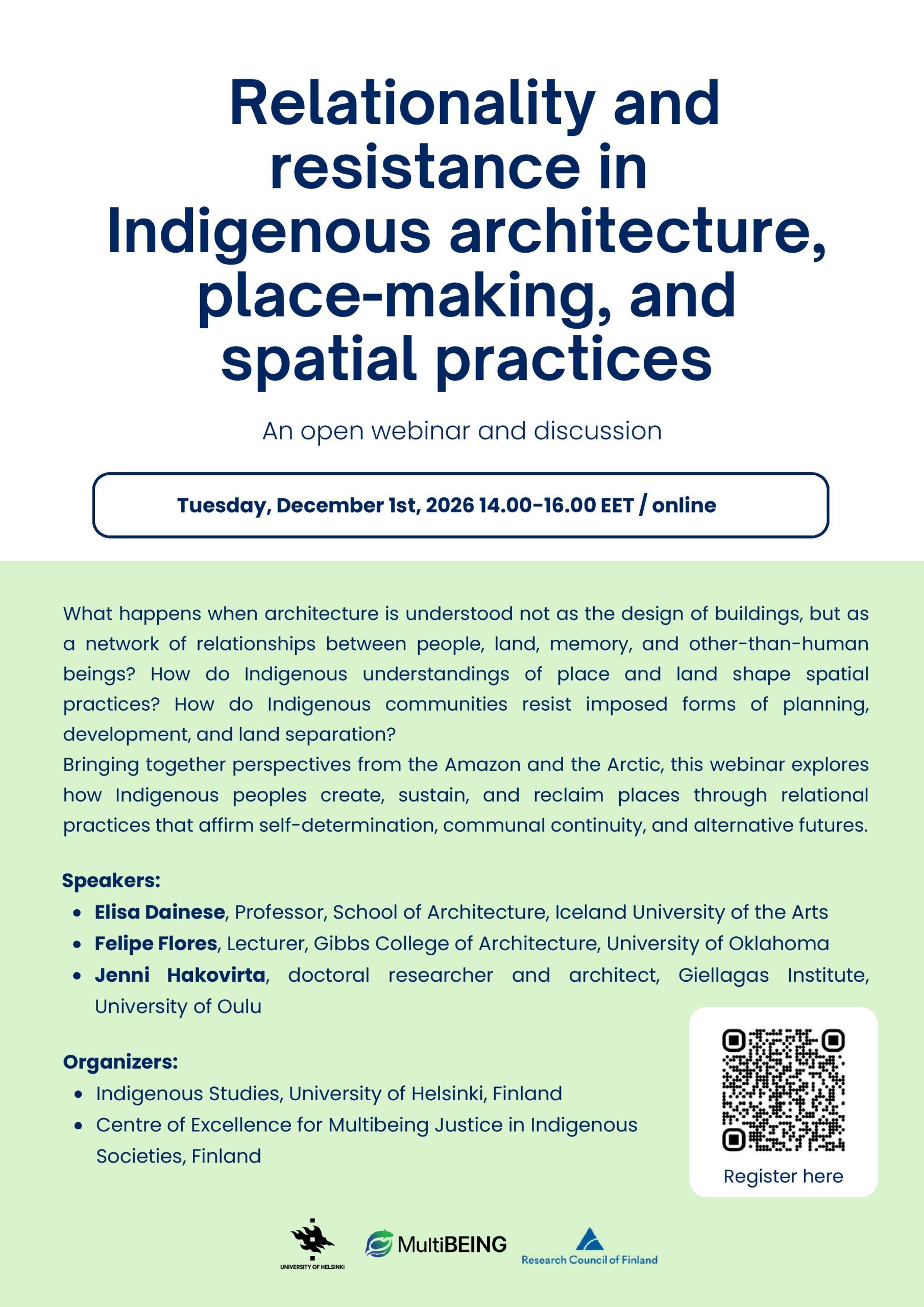
Our MultiBEING CoE, together with Indigenous Studies at the University of Helsinki, warmly invite you to join the webinar “Relationality and Resistance in Indigenous Architecture, Place-Making, and Spatial Practices” on Tuesday, 1 December, from 14.00 to 16.00 (EET).
What happens when architecture is understood not simply as the design of buildings, but as a network of relationships between people, land, memory, and more-than-human beings? How do Indigenous understandings of place shape spatial practices, and how do Indigenous communities resist imposed forms of planning, development, and land separation?
Bringing together perspectives from the Amazon and the Arctic, this webinar explores how Indigenous peoples create, sustain, and reclaim places through relational practices that affirm self-determination, communal continuity, and alternative futures.
The webinar features three invited speakers whose work examines Indigenous architecture, spatial practices, and experiences of resistance in diverse contexts. In addition to the presentations, the programme includes a panel discussion and an open question-and-answer session.
Speakers
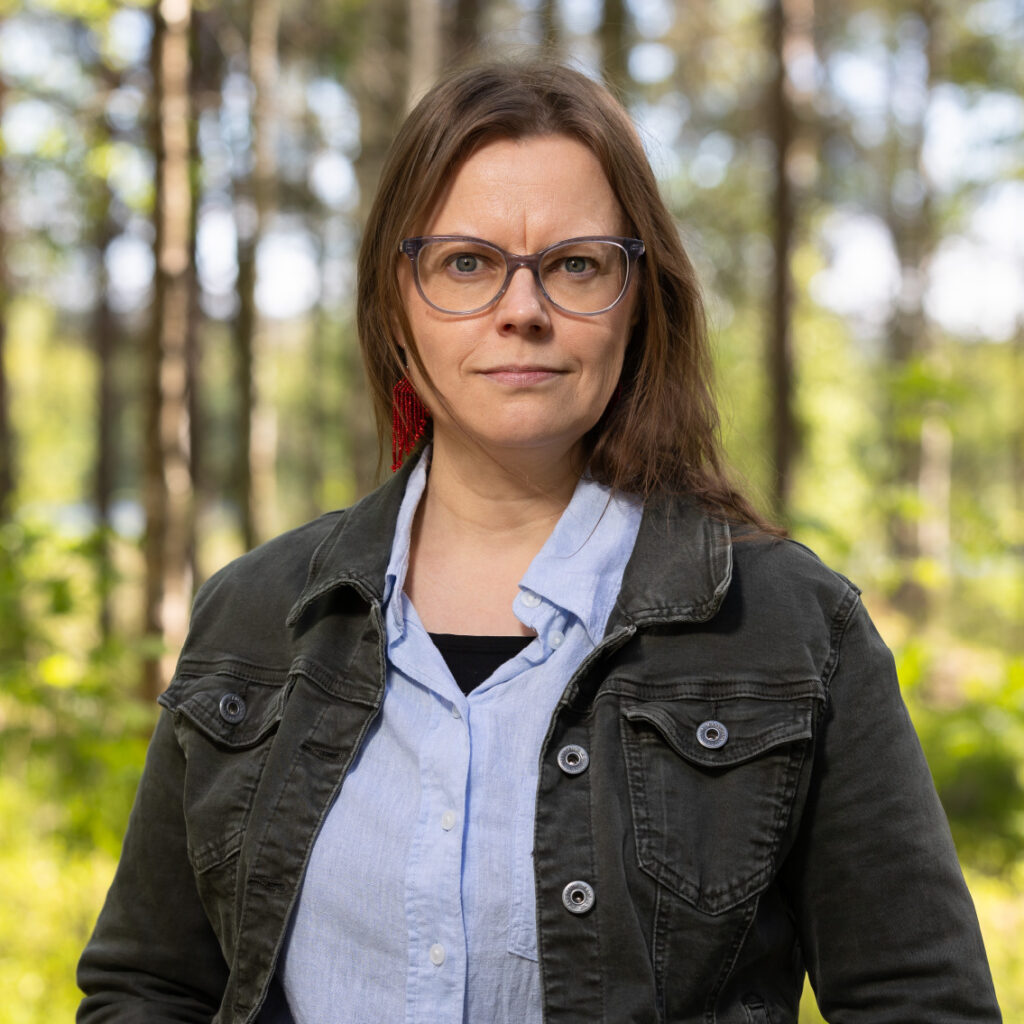
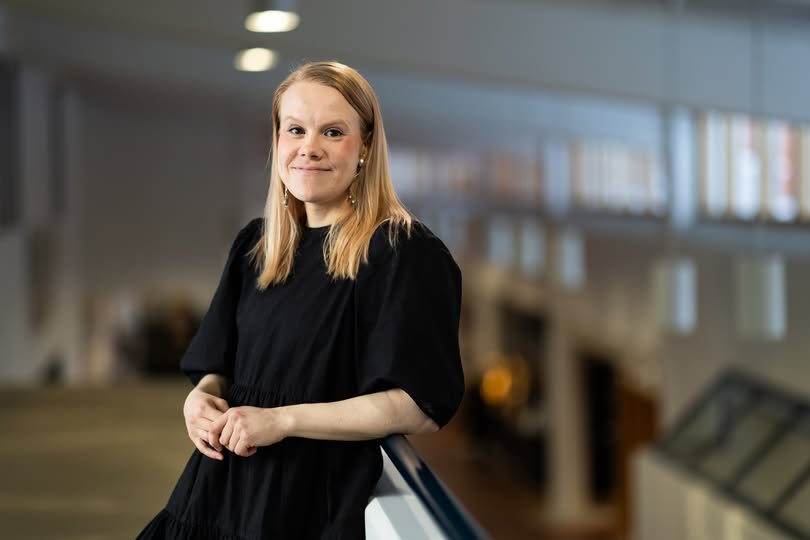
Elisa Dainese is a historian and theorist of contemporary history, architecture, and urbanism. Her research focuses on Arctic histories of displacement and Inuit and Sámi lived experiences of resistance. She is Professor of Architecture at the Iceland University of the Arts, Director of the Arctic Places Research Lab, and Co-Director of the War Diaries Research Network.
Felipe Flores is a lecturer at the University of Oklahoma’s Gibbs College of Architecture. His research focuses on architectural knowledge in Achuar Amazonian communities and examines how Indigenous epistemologies inform spatial practices that challenge Western design paradigms and state-led development. He currently serves as Academic Advisor and is a former Editor-in-Chief of Telesis: The Architecture Student Journal.
Jenni Hakovirta is an Aanaar Sámi architect and researcher at the Giellagas Institute, University of Oulu. Her research focuses on developing Sámi and Indigenous architectural theory. She has been involved in the Kárten – Mapping Sámi Architecture project, which was presented at the 2023 Venice Architecture Biennale and formed part of the Bodø European Capital of Culture 2024 programme. She also participated in the Canadian Centre for Architecture’s project ᖏᕐᕋᒧᑦ / Ruovttu Guvlui / Towards Home as a member of its Futurecasting group.
Registration
Please register by 29 November using the following registration form: Register here
The Zoom link will be sent to all registered participants on 30 November.
We warmly welcome scholars, students, practitioners, and all others interested in Indigenous architecture, place-making, and spatial justice. Please feel free to share this invitation with colleagues and networks.